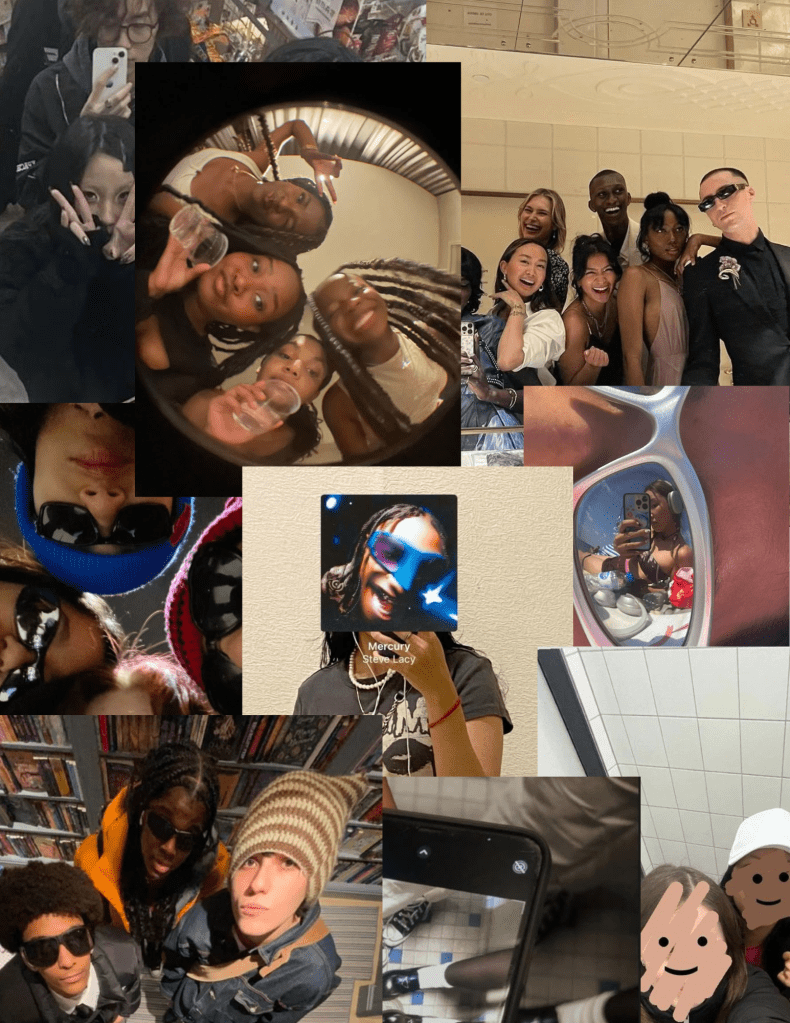
In this digital age, selfies have become a form of self-expression but also spark debates about whether they are a tool for empowerment or narcissism. In a world revolving around social media, selfies allow individuals to control their own image, helping build confidence, self-acceptance, and community. On the flip side, it has become to normalized to share one’s personal life with the public that sometimes the topic of self-absorption and even a desire for validation comes into play. Social media has allowed those to build connections and community with others, but it has also opened the door for impossible beauty standards.
Let’s start with the pros. Selfies allow people to present themselves in a way that aligns with their identity, comfortability, and personal brand. This grants people autonomy over how they are portrayed and is extremely important to marginalized groups such as LGBTQ+ and POC, as representation can often be lacking or very stereotypical. Social media also makes a space of community through positive feedback from family, friends, and strangers. This feedback can be uplifting and empowering and create a healthier body image. Now for the cons. Some become overly concerned about their online appearance and prioritize external validation more than genuine self-worth. Social media has added this pressure and glorified perfection, especially amongst women, on how their body should look.
By fostering a culture of comparison, selfies can be more harmful to others in certain circumstances. The more people engage with edited and filtered images, the more warped the beauty standards become, and the pressure to fit them increases, especially those who are younger and do not know any better. Since it is difficult to always monitor the content the younger generation consumes, young girls can be exposed to harmful beauty standards and develop this insecurity to try and fit in to what society deems “beautiful” or “socially acceptable.” In a way, children have not been satisfied with just being kids because of outside influences to look “prettier” or “older.” This is harmful to their development in the long run and opens the doors to possible anxiety or issues with body dysmorphia. The other harmful aspect is becoming obsessed with the number of likes, comments, and shares a selfie receives as it devises a constant need for external validation and compliments that can be damaging to not just grown women but the younger generation as well.
It is a slippery slope to determine if selfies themselves are harmful or empowering, as it depends on what context a person is using it for. I have personally used selfies as a form of documentation for my life, a physical form of the memories I’ve made throughout the years. A way for me to look back at the highlights of my life and the joys I’ve shared with loved ones. Although I do sometimes get wrapped up in the idea of more likes and etc. That it is because of the digital society we live in and the influence social media has had over us. Like many aspects of social media, moderation and a modicum of self-awareness is important in this context.
 The Curator